
Discover Your Italian Roots: Liguria
This article is part of our ongoing Discover Your Italian Roots: The 20 Regions of Italy series, where we explore the history, culture, and genealogical significance of each Italian region.
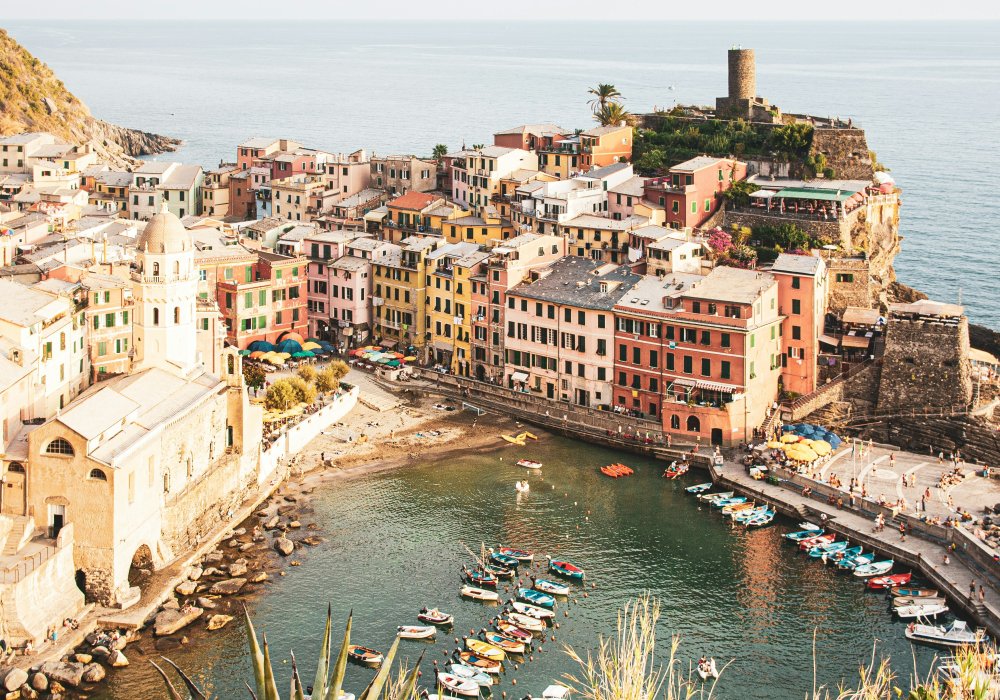
Wedged between the Ligurian Sea and the mountains of northwestern Italy, Liguria is a narrow crescent of coastline where colorful villages cling to steep hillsides and historic ports face the Mediterranean.
Best known today for Genoa, Portofino, Sanremo, and the Cinque Terre, Liguria has always been shaped by its geography. With limited farmland and mountains rising sharply behind the coast, generations of Ligurians looked to the sea for their livelihoods. Sailors, fishermen, merchants, shipbuilders, craftsmen, and eventually emigrants carried Ligurian traditions far beyond Italy.
For descendants of Ligurian immigrants, tracing the family back to its town of origin can reveal a history deeply connected to the Mediterranean and, in many cases, to the great Italian migrations of the nineteenth and early twentieth centuries.
A Region Between the Mountains and the Sea
Liguria stretches along Italy's northwestern coast, bordered by France to the west, Piedmont and Emilia-Romagna to the north, Tuscany to the east, and the Ligurian Sea to the south.
The region consists of the Metropolitan City of Genoa (Genova) and the provinces of Imperia, Savona, and La Spezia.
Its capital, Genoa, has been one of the Mediterranean's great port cities for centuries.
Although Liguria is famous for its coastline, much of the region is mountainous. In many places, the mountains rise almost directly from the sea, leaving relatively little flat land for farming or settlement.
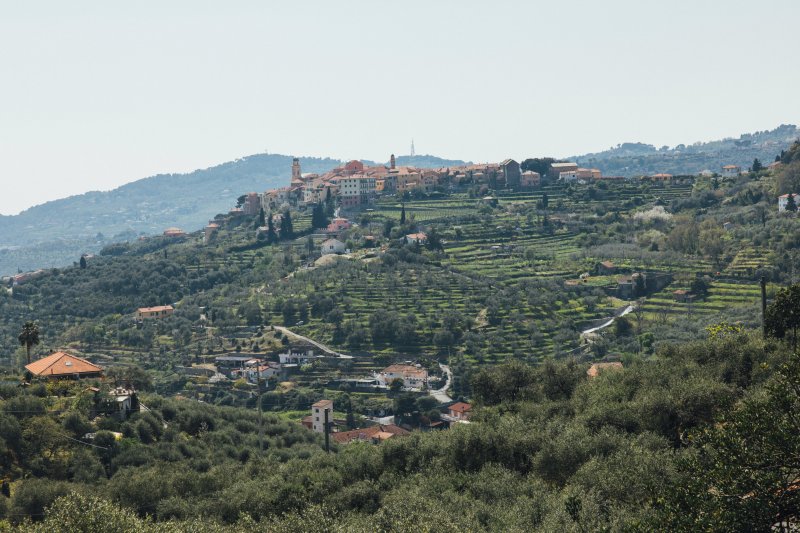
Generations of Ligurians adapted by building towns into hillsides and creating agricultural terraces supported by stone walls. Olives, grapes, herbs, and vegetables were cultivated on land that could otherwise be difficult to farm.
This dramatic geography also produced hundreds of closely knit communities. For anyone researching Ligurian ancestry, identifying one of those communities is crucial. Knowing that your ancestor came from Liguria, or even "Genoa," may not be enough to locate the correct records.
Genoa and the Sea
It is difficult to understand Liguria without understanding Genoa.
During the Middle Ages, Genoa became one of Europe's great maritime republics, competing with Venice for control of Mediterranean commerce. Genoese merchants and navigators developed commercial networks stretching far beyond the Italian peninsula, and the city's wealth can still be seen in its palaces, churches, and historic streets.
Christopher Columbus, or Cristoforo Colombo, is traditionally identified as having been born in Genoa, but he was only the most famous example of a much broader Ligurian maritime tradition.
Generations of sailors, merchants, fishermen, shipbuilders, and dockworkers made their living from the sea.
Liguria and Italian Emigration
Liguria has a particularly interesting place in the history of Italian emigration.
Throughout the nineteenth and early twentieth centuries, Genoa became one of Italy's most important departure points for transatlantic migration. Italians arrived from other regions and passed through the city before boarding ships for an uncertain future abroad.
But Ligurians themselves had been migrating long before the peak years of mass Italian emigration.
Their maritime traditions and commercial relationships gave them particularly strong connections with South America.
Large Ligurian communities developed in Argentina, Uruguay, Brazil, Chile, and Peru, while other Ligurians migrated to the United States, France, and elsewhere.
This creates an important distinction for family historians:
A passenger record identifying Genoa as the port of departure did not necessarily mean the passenger was Ligurian.
An ancestor from Piedmont, Lombardy, Tuscany, or another part of Italy might have traveled to Genoa simply to board a ship.
Separating the port of departure from the actual place of birth is often one of the first challenges in tracing an Italian immigrant back to the correct comune.
Life in Liguria Before Emigration
For ordinary Ligurians, life was closely connected to the region's challenging landscape.
Along the coast, the sea provided work and food. Inland, steep slopes made large-scale farming difficult, so families combined small-scale agriculture with forestry, stonework, and skilled trades.
Common occupations included:
- Fishermen and sailors
- Shipbuilders and dockworkers
- Farmers and agricultural workers
- Stone masons
- Craftsmen and skilled tradesmen
- Merchants and shopkeepers
Families frequently combined several types of work. A household might cultivate olives or grapes while family members also worked at sea, in construction, or in a nearby port.
In the nineteenth century, Genoa and other parts of Liguria increasingly participated in Italy's industrial development. Shipyards, metalworking, manufacturing, and port industries created new opportunities, but rural and mountain communities did not benefit equally.
Economic pressures, limited agricultural land, and existing connections abroad encouraged many Ligurians to seek opportunities elsewhere. Once immigrants established themselves overseas, family and neighbors often followed, creating migration chains connecting particular Ligurian towns with communities thousands of miles away.
The Two Faces of Liguria
Modern visitors often think of Liguria almost entirely as coastline, but the region has two very different faces.
The Ligurian Riviera stretches along the Mediterranean and has traditionally been divided into two parts.
The Riviera di Ponente, stretching west toward France, includes Savona, Imperia, Sanremo, and other coastal communities.
The Riviera di Levante, extending east from Genoa, includes Camogli, Portofino, Rapallo, the Cinque Terre, and the Gulf of La Spezia.
Among Liguria's most famous landscapes are the five villages of the Cinque Terre: Monterosso al Mare, Vernazza, Corniglia, Manarola, and Riomaggiore.
Today these towns attract visitors from around the world, but historically life here demanded extraordinary adaptation. Families built terraces into steep hillsides and cultivated grapes, olives, and other crops on land overlooking the sea.
Travel inland and Liguria changes quickly. Coastal towns give way to wooded valleys, mountain villages, ancient footpaths, farms, and small communities that can feel far removed from the glamorous resorts of the Riviera.
For descendants tracing family roots, this inland Liguria can be especially important. Many emigrants left small villages rather than the famous coastal towns people associate with the region today.
Tracing Your Ligurian Ancestors
Researching ancestors from Liguria requires understanding exactly when and where they lived. Identifying the exact comune is critical.
Even if family stories consistently identify Genoa, researchers should try to confirm whether that means the city itself or another community in the surrounding territory.
Depending on the location and time period, useful sources may include:
- Civil birth, marriage, and death records
- Parish baptism, marriage, and burial registers
- Military conscription and service records
- Marriage banns and supplemental documents
- Population and residency records
- Passport and immigration records
Some Ligurian records can be researched through the Italian government's Portale Antenati, while others remain with local comuni, parishes, diocesan archives, or State Archives.
The Genoa State Archives, for example, preserves civil records from different historical periods as well as extensive military documentation.
For earlier generations, parish registers can become especially important.
Once the correct town or parish is identified, it may be possible to trace a family across generations through records of births, marriages, occupations, residences, and deaths.
Ligurian Surnames and Family Connections
Surnames can sometimes provide clues to Ligurian origins, although a surname alone should never be treated as proof of a family's birthplace.
Surnames with long associations in Liguria include:
- Parodi
- Pastorino
- Repetto
- Traverso
- Boero
- Canepa
- Garbarino
- Calcagno
- Sciaccaluga
Some surnames are concentrated in particular parts of the region or even in groups of neighboring communities. These geographic patterns can be particularly useful when an immigrant's exact birthplace is unknown. Comparing passenger manifests, naturalization records, marriage records, death certificates, and the birthplaces of siblings or neighbors can sometimes reveal a cluster of people from the same Ligurian community.
Italian migration often followed these existing family and village networks.
One immigrant left, found work, and then helped siblings, cousins, neighbors, or future spouses follow.
What looks like a collection of unrelated Italian households in an American or South American community can sometimes lead back to the same handful of villages in Liguria.
The Flavors of Liguria
Liguria has given the world some of Italy's most recognizable foods.
With limited flat agricultural land but a climate well suited to herbs, olives, vegetables, and grapes, Ligurian cooking developed around ingredients that could thrive on its terraced hillsides. Basil, in particular, has become one of the region's defining ingredients.
Its most famous contribution is pesto, traditionally made with Genovese basil, extra virgin olive oil, pine nuts, garlic, Parmigiano Reggiano, and Pecorino.
Other specialties include:
- Focaccia genovese, Liguria's thin, olive oil-rich focaccia
- Farinata, a thin, savory crepe made from chickpea flour
- Trofie al pesto, twisted pasta traditionally served with pesto
- Pansoti, filled pasta often served with walnut sauce
- Focaccia di Recco, a thin cheese-filled focaccia
- Taggiasca olives, small and flavorful, associated particularly with western Liguria
- Ligurian olive oil, including the region's Riviera Ligure DOP extra virgin olive oil
- Salame di Sant'Olcese, a traditional salami from the Genoa area, related to what many Americans know as Genoa salami
- Ligurian wines, including Vermentino, Pigato, Rossese, and the distinctive Sciacchetrà of the Cinque Terre
For descendants, recipes can sometimes preserve clues about family origins long after the original language or hometown has been forgotten. A family may simply remember that its food was "Italian," only to discover generations later that pesto, focaccia, pansoti, or a particular way of preparing vegetables pointed back toward Liguria.
A Ligurian Identity Carried Around the World
Centuries of life between mountains and sea helped create a strong local identity based on adaptability, resourcefulness, and independence.
Its people learned to build communities on narrow coastlines and steep hillsides, make productive use of difficult terrain, and look toward the sea for trade, work, and opportunity.
When Ligurians emigrated, they carried that culture with them.
Their descendants can now be found throughout the Americas and Europe, sometimes generations removed from the village where the family story began.
Discovering that village can change what it means to say your family is "Italian." Instead of a country on a map, your ancestry becomes a particular place, perhaps a Genoese neighborhood, a fishing town along the Riviera, or a small mountain community overlooking the Mediterranean.
Discover Your Ligurian Roots
Do you have Ligurian ancestry?
Maybe your ancestors were sailors, fishermen from a coastal village, craftsmen from Savona, or farmers who cultivated the steep terraces overlooking the Mediterranean.
Or perhaps all you know is an old family story saying that someone "came from Genoa."
That clue could be the beginning of a much larger story.
Identifying your ancestor's actual town of origin can reveal not only names and dates, but also the community they called home, the work they performed, the traditions they carried abroad, and the circumstances that may have led them to leave Italy.
Our team at My Italian Family specializes in helping descendants of Italians determine their eligibility for citizenship by descent and managing the recognition process from start to finish.
Book a free consultation today and take the first step toward reconnecting with your Italian heritage.
Continue Exploring Italy's Regions:
Previous in the Series: Discover Your Italian Roots: Aosta Valley | My Italian Family
Next in the Series: Discover Your Italian Roots: Lombardy (coming soon)
Return to the Series Hub: Discover Your Italian Roots: The 20 Regions of Italy | My Italian Family