
Discover Your Italian Roots: Aosta Valley
This article is part of our ongoing Discover Your Italian Roots: The 20 Regions of Italy series, where we explore the history, culture, and genealogical significance of each Italian region.
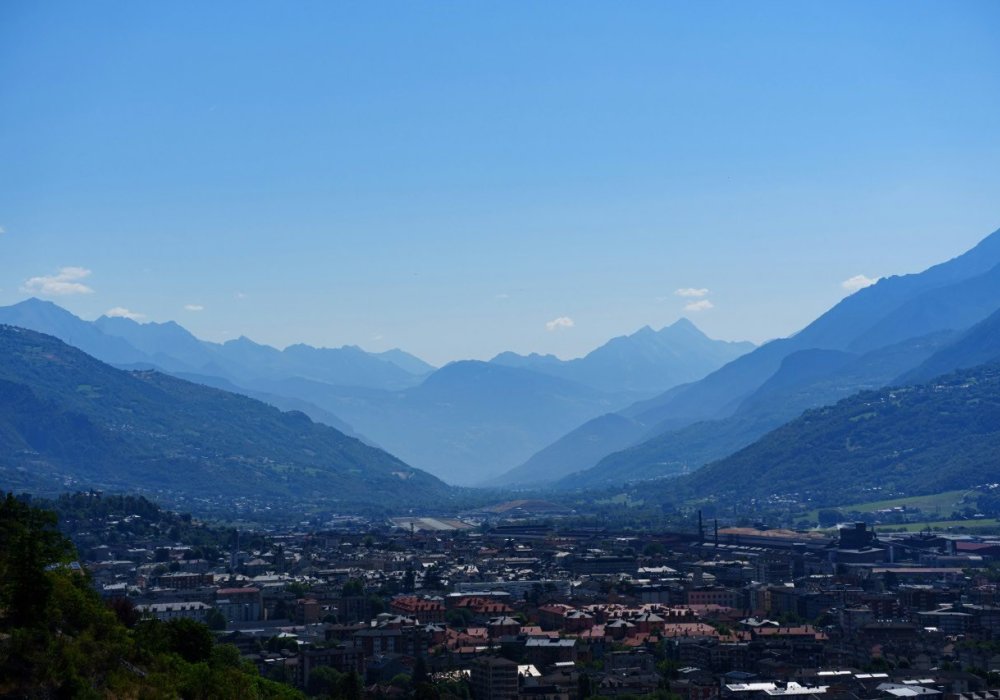
Tucked into Italy's northwestern corner and surrounded by some of Europe's highest peaks, Aosta Valley (Valle d'Aosta/Vallée d'Aoste) is the smallest region in Italy, yet it possesses one of the richest and most distinctive cultural identities in the country.
Bordering both France and Switzerland, Aosta Valley has spent centuries at the crossroads of European civilizations. Roman, French, Germanic, and Alpine influences have created a regional identity unlike any other in Italy.
For descendants of Italian immigrants, discovering roots in Aosta Valley often uncovers a story that is as much Alpine as it is Italian.
Where Is Aosta Valley?
Aosta Valley sits in Italy's far northwest corner, surrounded by some of Europe's most famous mountain ranges.
The region shares borders with:
- France to the west
- Switzerland to the north
- Piedmont to the south and east
Despite covering only about 1,263 square miles, Aosta Valley contains some of Europe's most iconic peaks, including:
- Mont Blanc (Monte Bianco)
- Matterhorn (Monte Cervino)
- Monte Rosa
- Gran Paradiso
The regional capital, Aosta, serves as the cultural, historical, and administrative center of the valley.
Unlike the rest of Italy, Aosta Valley is the only region without provinces and functions as a single autonomous entity.
From the Salassi to Rome
Long before the rise of modern Italy, Aosta Valley was home to the Salassi, a Celtic-speaking Alpine people who controlled important routes through the mountains.
Their strategic location attracted the attention of Rome. In 25 BCE, Roman forces conquered the region and established Augusta Praetoria, today's city of Aosta.
Some historians estimate that thousands of Salassi were sold into slavery following the conquest, while others remained and gradually merged into Roman society.
Remarkably, many traces of Roman civilization remain visible today, including:
- The Arch of Augustus
- The Roman Theatre
- Ancient city walls
- Bridges and roads
Because of its extraordinary collection of Roman monuments, Aosta is often known as the "Rome of the Alps."
For descendants researching family history, this long continuity of settlement helps explain why many communities in the region have maintained their identities for centuries.
A Land Shaped by the Alps
Unlike many regions of Italy where agriculture dominated daily life, Aosta Valley's history has always been closely connected to the mountains.
For centuries, communities were built in valleys separated by steep Alpine terrain. This geographic isolation helped preserve local customs, dialects, and traditions that might otherwise have disappeared.
Mountain passes through the region also made it an important route connecting Italy with northern Europe, bringing both opportunities and outside influences.
The Great St. Bernard Pass and Little St. Bernard Pass made Aosta Valley one of Europe's most important transportation corridors.
For over 2,000 years these routes carried:
- Roman armies
- Medieval pilgrims
- Merchants
- Travelers
- Migrant workers
Families living near these routes often found occupations beyond agriculture. Many worked as guides, innkeepers, muleteers, traders, or customs officials.
For genealogists, this history can help explain why ancestors from Aosta Valley sometimes appear in records across Italy, France, and Switzerland. Long before modern borders existed, movement through these mountain corridors was a normal part of daily life.
A Unique Cultural Identity
Aosta Valley stands apart from every other region of Italy because it is officially bilingual.
Both Italian and French enjoy official status throughout the region.
Historically, many local residents also spoke Valdôtain, a Franco-Provençal dialect that developed in the Alpine valleys over centuries.
For hundreds of years:
- French was the language of administration.
- Legal documents were commonly drafted in French.
- Local elites were educated through Savoyard and French institutions.
When Italy unified in the nineteenth century, many communities had stronger cultural ties to France and Switzerland than to Rome.
As a result, ancestors who emigrated from Italy may have spoken French at home and considered themselves culturally Alpine rather than conventionally Italian.
This unique linguistic heritage often appears in genealogical records, where researchers may encounter:
- Italian-language records
- French-language records
- Latin church records
- Multiple surname spellings
- Alternate place-name variations
- Records for the same family in archives located in multiple countries
Surnames such as Bérard, Favre, Charrière, Vuillermin, Bonin, and Perron can appear distinctly French despite having deep historical roots within the region.
Understanding these linguistic influences can be an important advantage when conducting family history research.
The Secret World of the Walser Communities
One of the most surprising aspects of Aosta Valley's history is the presence of the Walser people, a German-speaking population that migrated into the region from present-day Switzerland during the Middle Ages.
Isolated communities such as:
- Gressoney-Saint-Jean
- Gressoney-La-Trinité
- Issime
developed distinctive traditions, architecture, and dialects that differed from those found elsewhere in Italy.
For genealogists, research in Walser communities can be especially interesting because records may reflect influences from German, French, Italian, and Latin traditions. Few regions in Italy offer such a diverse historical and linguistic landscape.
Life in Aosta Valley Before Emigration
Life in Aosta Valley was shaped by the challenges and opportunities of the Alpine environment. Limited farmland and long winters required families to be resourceful, often combining several occupations to support themselves.
Common livelihoods included:
- Livestock farming, particularly cattle raising
- Production of Fontina cheese and other dairy products
- Forestry and timber work
- Small-scale agriculture on mountain terraces
- Stone masonry and woodworking
- Guiding travelers through Alpine passes
- Transporting goods across mountain routes
- Seasonal trade with neighboring communities in France and Switzerland
Unlike many parts of Italy where agriculture dominated local economies, the people of Aosta Valley often depended on a combination of farming, craftsmanship, and trade. Families adapted to the region's rugged terrain by diversifying their sources of income and maintaining strong ties with neighboring Alpine communities.
Emigration from Aosta Valley
Although Aosta Valley experienced less emigration than many southern regions, economic opportunities remained limited for some families, leading many residents to seek work elsewhere during the nineteenth and twentieth centuries.
Those who left often migrated first to:
- France
- Switzerland
- Other areas of northern Italy
Over time, some families continued on to:
- The United States
- Canada
- Argentina
Because the region's population was relatively small, descendants of Aosta Valley emigrants can sometimes be more difficult to trace than those from larger regions. However, once a family's village of origin is discovered, local records often provide a remarkably detailed picture of earlier generations.
The Famous Foods of Aosta Valley
While geography influenced settlement patterns and migration, it also shaped the region's culinary traditions.
Traditional foods emphasize hearty ingredients designed to sustain families through long Alpine winters and reflect the area's strong agricultural and pastoral traditions.
Some regional specialties include:
Fontina Cheese
Perhaps the region's best-known product, Fontina, has been produced in Aosta Valley for centuries and remains one of Italy's most celebrated cheeses.
Polenta
A staple food made from corn, often served alongside meat, cheese, or stews.
Carbonade Valdostana
A rich beef stew flavored with wine and spices.
Jambon de Bosses
A distinctive mountain-cured ham produced in the region.
Alpine Wines
Though often overshadowed by larger wine regions, Aosta Valley produces respected wines on some of the highest vineyards in Europe.
Notable Towns and Communities
Aosta
The regional capital and home to many of the region's best-preserved Roman landmarks.
Courmayeur
A famous Alpine resort town located near Mont Blanc.
Saint-Vincent
Known for its historic spa culture and mountain setting.
Cogne
A picturesque community near Gran Paradiso National Park.
Bard
Home to the impressive Fort Bard, one of the most recognizable landmarks in the region.
A Small Region with a Remarkable Story
Aosta Valley may be Italy's smallest region, but its history is anything but small.
For descendants whose ancestors came from Aosta Valley, family history often reveals a heritage unlike that found anywhere else in Italy. Roman foundations, French linguistic influences, isolated Alpine villages, and the remarkable legacy of the Walser communities have all left their mark on the region's identity.
Whether your ancestors were mountain farmers, traders crossing the Alpine passes, or members of one of the valley's centuries-old communities, researching Aosta Valley offers a unique opportunity to discover how geography, culture, and history shaped your family's story.
For more than 20 years, My Italian Family has specialized in helping Italian descendants navigate the process of acquiring dual citizenship with Italy.
Book a free consultation today and take the first step toward reconnecting with your Italian heritage.
Continue Exploring Italy's Regions
Previous in the Series: Discover Your Italian Roots: Piedmont | My Italian Family
Next in the Series: Liguria (coming soon)
Return to the Series Hub: Discover Your Italian Roots: The 20 Regions of Italy | My Italian Family