
Discover Your Italian Roots: Piedmont
Part 1 of our Italian Roots Regional Spotlight Series
Italy's Noble Northwest
Nestled against the Alps in Italy's northwestern corner, Piedmont (Piemonte) is a region of majestic mountains, elegant cities, world-renowned wines, and deep historical significance. Often overshadowed by neighboring Tuscany in international tourism, Piedmont is nevertheless one of Italy's most influential regions and played a pivotal role in the creation of modern Italy.
The Meaning Behind the Name
The name Piemonte translates to "foot of the mountain," an appropriate description for a region surrounded on three sides by the Alps. These mountains have shaped Piedmont's history, economy, and culture for centuries, providing protection from invasions while creating trade routes that connected Italy to France and Switzerland.
Today, Piedmont borders France, Switzerland, Lombardy, Liguria, and the Aosta Valley. Its capital, Turin (Torino), remains one of Italy's most important cultural and economic centers.
The Birthplace of Modern Italy
Few regions can claim a greater role in Italy's unification than Piedmont.
Before Italy became a unified nation in 1861, much of the peninsula was divided among various kingdoms and states. Piedmont formed the core of the Kingdom of Sardinia, ruled by the House of Savoy. Under the leadership of King Victor Emmanuel II and Prime Minister Camillo Benso, Count of Cavour, Piedmont became the driving force behind the Risorgimento, the movement that unified Italy.
When Italy emerged as a single nation, Turin briefly served as its first capital before the government relocated to Florence and later Rome.
For descendants researching Italian ancestry, understanding Piedmont's political importance can provide valuable context about the world their ancestors knew before emigration.
What many descendants don't realize is that their ancestors may not have initially thought of themselves as "Italian" at all. Prior to unification in 1861, many people identified far more strongly with their village, province, or kingdom than with a nation called Italy. An emigrant leaving Turin, Cuneo, Novara, or Asti in the late nineteenth century often considered himself Piedmontese first and Italian second. Understanding this local identity can help explain why family traditions, dialects, and regional customs remained so strong even generations after immigration.
Turin: An Elegant Capital
Unlike many Italian cities dominated by medieval layouts, Turin feels distinctly sophisticated and orderly.
Wide boulevards, grand piazzas, stately arcades, and royal palaces reflect centuries of Savoy influence. Visitors can explore:
- The Royal Palace of Turin
- Palazzo Madama
- The Mole Antonelliana
- The Egyptian Museum, one of the finest collections outside Egypt
- The Basilica of Superga
Turin is also known as the home of Fiat, the automotive company that helped drive Italy's industrial growth throughout the twentieth century.
A Land of World-Class Wines
Piedmont is synonymous with some of the finest wines in the world.
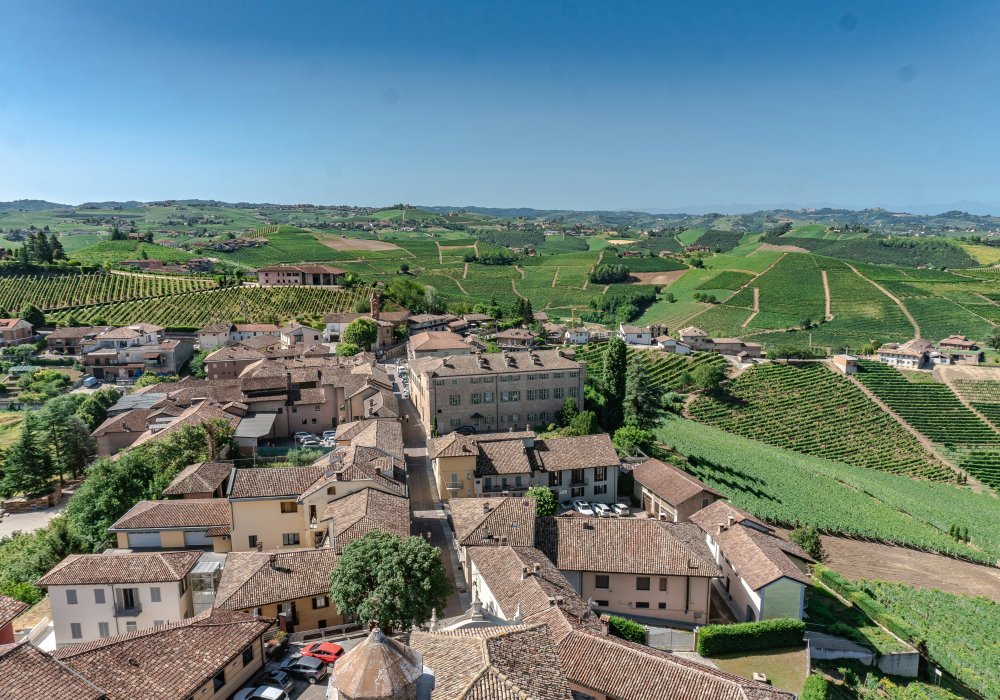
The rolling hills of Langhe, Roero, and Monferrato produce grape varieties cherished by wine enthusiasts worldwide, including:
- Barolo
- Barbaresco
- Barbera
- Dolcetto
- Moscato d'Asti
The Langhe region has earned UNESCO World Heritage recognition for its cultural landscape of vineyards, villages, and centuries-old agricultural traditions.
Wine production remains deeply woven into family life across much of rural Piedmont.
For many families from rural Piedmont, winemaking wasn't a luxury industry but a way of life. In countless villages throughout the Langhe and Monferrato, nearly every household maintained a small vineyard or participated in the grape harvest. Even family members who left for America, Argentina, or elsewhere often carried memories of harvest season with them. Some descendants are surprised to discover that stories passed down about homemade wine or grape-growing traditions originated in Piedmont's vineyard-covered hills.
Truffles and Culinary Excellence
Piedmont's cuisine is often considered among Italy's most refined.
The region's most celebrated culinary treasure is the Alba White Truffle, one of the world's most prized delicacies. Each autumn, visitors travel from around the globe to attend truffle festivals and auctions.
Other regional specialties include:
- Vitello tonnato
- Agnolotti pasta
- Bagna cauda
- Brasato al Barolo
- Hazelnut desserts
- Gianduja chocolate
In fact, Piedmont is widely regarded as the birthplace of modern Italian chocolate culture. Turin's historic cafés and chocolatiers remain beloved institutions today.
Immigration from Piedmont
Although southern Italy provided the greatest share of Italian emigrants, many Piedmontese families also left during the late nineteenth and early twentieth centuries.
Immigrants from Piedmont settled throughout:
- Argentina
- Brazil
- France
- Switzerland
- The United States
Many sought opportunities in agriculture, industry, and mining. Their descendants can still be found across North and South America today.
When researching Piedmontese ancestry, genealogists often encounter well-preserved civil and church records that can provide remarkable insight into family histories.
Piedmontese immigration differed somewhat from that of southern Italy. Because of the region's proximity to France and Switzerland, many workers first sought opportunities across nearby borders before considering overseas emigration. Others left from the busy port of Genoa in neighboring Liguria, joining millions of Italians bound for North and South America.
Piedmontese immigrants also developed a reputation for skilled labor. Many found work as stonemasons, miners, tradesmen, factory workers, and agricultural specialists. In some communities abroad, entire groups of villagers from the same town settled together, recreating the social networks they had relied upon back home.
Hidden Gems of the Region
Beyond Turin and the wine country, Piedmont contains numerous treasures worth exploring.
Lake Maggiore
Shared with Lombardy, this breathtaking lake features elegant villas, gardens, and charming villages.
Sacra di San Michele
Perched atop a mountain ridge, this medieval abbey inspired Umberto Eco's famous novel The Name of the Rose. For descendants tracing family roots, the Sacra di San Michele represents something deeper than a tourist attraction. For nearly a thousand years it has overlooked one of the most important routes through the Alps. Countless travelers, merchants, pilgrims, soldiers, and emigrants passed through this corridor while journeying between Italy and the rest of Europe.
Val di Susa
This historic valley has connected Italy and France for centuries and contains numerous castles and ancient monuments.
The Alps
Outdoor enthusiasts enjoy skiing, hiking, climbing, and breathtaking alpine scenery throughout the region.
The Piedmontese Character
Ask Italians to describe Piedmont, and you'll often hear words like hardworking, reserved, practical, and independent.
While every individual is unique, these characteristics have long been associated with the region. Generations of life in mountain valleys, agricultural communities, and growing industrial centers helped create a culture that values perseverance, craftsmanship, and self-reliance.
Descendants frequently recognize these traits in their own families. Stories of relatives who worked tirelessly, saved carefully, built businesses, or quietly sacrificed for future generations often reflect values deeply rooted in Piedmontese culture.
Why Piedmont Matters to Family History
For those tracing Italian roots, Piedmont offers a fascinating blend of aristocratic history, rural traditions, and industrial development.
Ancestors from Piedmont may have lived in bustling cities like Turin, vineyard-covered hills in the Langhe, or isolated mountain villages nestled deep within the Alps. Understanding the region's history can help descendants better appreciate the circumstances that shaped their family's journey.
Discover Piedmont
Do you have Piedmontese roots? You may be connected to the very region that helped create modern Italy itself.
Piedmont captures many of Italy's most beloved qualities: magnificent landscapes, exceptional food, rich history, and enduring traditions. Whether your ancestors came from the vineyards of the Langhe, the bustling streets of Turin, or a small village nestled in the Alps, uncovering their story can help you better understand your own.
Our team specializes in helping descendants of Italians determine their eligibility for citizenship by descent and navigate the recognition process.
Book a free consultation today and take the first step toward reconnecting with your Italian heritage.