
What Your Italian Ancestor's Journey to America Was Really Like
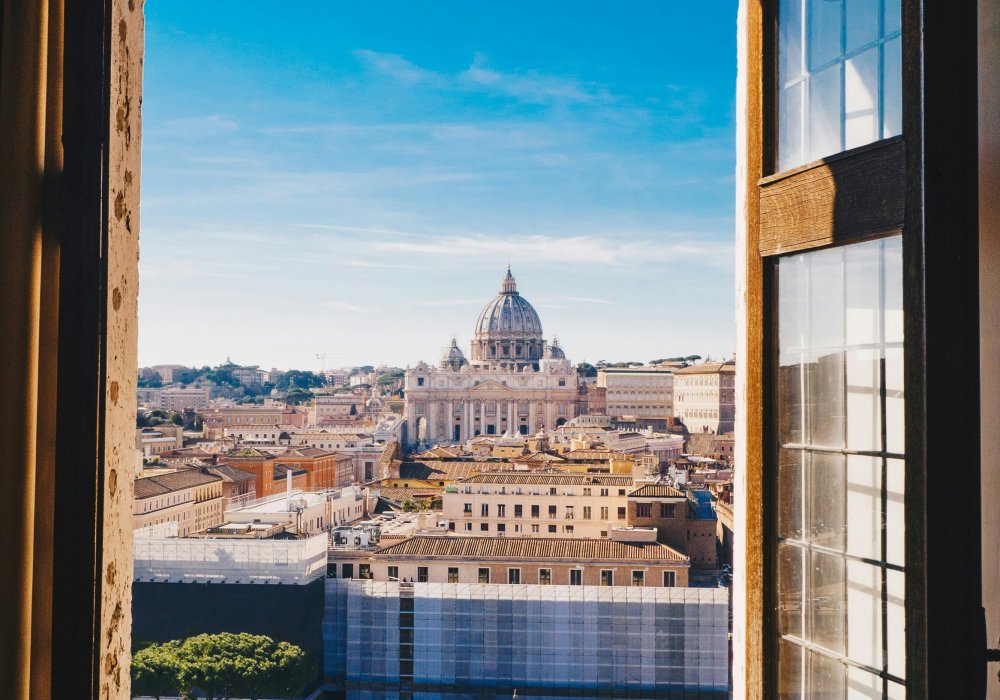
For millions of Italian Americans, the story begins long before citizenship applications, family trees, or genealogy records. It begins with a difficult decision made by an ancestor who left everything behind in search of a better future.
If your family traces its roots to Italy, chances are that somewhere in your family history, a parent, grandparent, or great-grandparent said goodbye to loved ones and boarded a ship bound for a country they had never seen.
But what was that journey really like?
Why So Many Italians Left Home
Between 1876 and 1976, more than 26 million Italians left Italy, making it one of the largest migration movements in modern history. While Italians emigrated to countries around the world, millions chose the United States as their new home.
Many came from rural communities in Southern Italy, Sicily, Calabria, Campania, Basilicata, Abruzzo, and other regions where economic opportunities were limited and poverty was widespread.
Life in many villages revolved around agriculture. Families often worked small plots of land, and opportunities for advancement could be scarce. For many, the United States represented something they had never experienced before: the possibility of economic mobility.
News traveled quickly. Letters from relatives who had already made the journey spoke of jobs, wages, and opportunity. Word spread from village to village, and entire communities began building migration networks that connected small Italian towns to American cities.
Between 1880 and 1924 alone, more than four million Italians immigrated to the United States, helping create one of the country's largest ethnic communities.
The Decision That Changed Everything
Surprisingly, many Italians did not initially plan to settle permanently in America. They were known as "birds of passage," migrants who hoped to earn money abroad and eventually return home.
Some left with the expectation that they would return within a few years. Others hoped to save enough money to purchase land back in Italy. While many eventually returned, countless others stayed, established families, and became part of the fabric of American life.
For many, the most difficult part was not the voyage itself but the uncertainty.
They did not know what awaited them in America.
They did not know whether they would find work.
They did not know if they would succeed.
Few could have predicted that their decision would shape the lives of generations yet to come.
Crossing the Atlantic
The voyage across the Atlantic could take anywhere from one to several weeks depending on the vessel and conditions. By the early twentieth century, many steamship crossings from Italy to New York took approximately 10 to 14 days, a dramatic improvement over earlier sailing voyages that could take much longer.
Most immigrants traveled in steerage, the least expensive section of a passenger ship. Accommodations were basic. Privacy was limited. Hundreds of passengers often shared crowded spaces.
Despite the difficult conditions, many travelers remembered the voyage as a period filled with anticipation. Everyone looked toward the horizon and imagined a new life.
For some passengers, seeing the Statue of Liberty for the first time became one of the most memorable moments of their lives.
The Ellis Island Experience
After arriving in New York Harbor, many immigrants passed through Ellis Island.
Contrary to a popular myth, Ellis Island officials generally did not change immigrants' surnames. Most names had already been recorded on passenger manifests before ships arrived in New York.
However, immigrants did undergo medical inspections and interviews. Authorities wanted to ensure new arrivals were healthy and capable of supporting themselves.
The process could feel intimidating. Many people spoke little or no English. Questions were often asked through translators. Families worried about being separated.
During its busiest years, Ellis Island processed thousands of immigrants each day. Most arrivals spent only a few hours there before being admitted to the United States and continuing on to their final destination.
For them, Ellis Island was not the end of the story.
It was just the beginning.
Building a New Life
The first years in America were often the hardest.
Many Italian immigrants worked demanding jobs in construction, factories, railroads, mines, and agriculture. The work was physically exhausting and frequently dangerous.
Families typically lived modestly. Several relatives might share a small apartment in order to save money. Boarders were common. Children often contributed to household income at a young age.
Yet despite these challenges, immigrants remained determined.
Many had crossed an ocean for the opportunity to create a better future for the next generation.
The America They Found Wasn't Always Welcoming
Italian immigrants arrived with tremendous hope, but they also faced significant challenges.
They were often viewed as outsiders, faced discrimination in employment and housing, and were sometimes stereotyped because of their language, religion, or region of origin. Newspapers and public figures occasionally portrayed Italian newcomers unfairly, particularly during periods of large-scale immigration.
Despite these obstacles, Italian immigrants built businesses, churches, mutual aid societies, and thriving communities that helped future generations succeed.
Understanding these challenges makes their achievements all the more remarkable.
Creating Italian Communities in America
Italian immigrants rarely faced their struggles alone.
As more people arrived from the same regions and villages, neighborhoods began to form throughout cities such as New York, Philadelphia, Boston, Chicago, and countless other communities across the United States.
Many immigrants settled alongside people from their exact village or province. Residents often spoke regional dialects rather than standard Italian. In fact, immigrants from different parts of Italy could sometimes find it easier to communicate in English than with one another in their local dialects.
This reflected the reality that Italy had only been unified as a nation in 1861 and that strong regional identities remained.
These neighborhoods became places where traditions could survive.
Italian churches were established.
Social clubs were created.
Regional festivals continued.
Families gathered for Sunday meals.
Italian dialects could still be heard on neighborhood streets.
In many ways, immigrants recreated a piece of Italy while adapting to life in America.
The Sacrifices That Changed Generations
The greatest achievement of many immigrants was not what they accomplished for themselves but what they made possible for their children and grandchildren.
The generation that arrived in America often worked long hours so their children could attend school.
They saved money so future generations could own homes and businesses.
They preserved family traditions while encouraging their children to embrace new opportunities.
Most could never have imagined that their descendants would one day search digitized records from home, trace family lines across continents, and visit the villages they left behind generations earlier.
Yet their sacrifices made all of that possible.
Why Their Story Still Matters Today
For descendants, discovering Italian ancestry is often about much more than documents and dates.
Every birth certificate, passenger manifest, marriage record, and family photograph represents a real person who made difficult choices and extraordinary sacrifices.
When you learn about your family history, you are not simply tracing names on a family tree.
You are rediscovering the people whose courage shaped your family's future.
Their journey carried them across an ocean.
Your journey may carry you back to the places they once called home.
And in that way, the story comes full circle.
About My Italian Family
At My Italian Family, we guide clients through complete Italian citizenship-by-descent projects from start to finish. Our team handles the genealogy research, record retrieval, document preparation, and support needed throughout the process, while helping families uncover the stories, places, and people behind their Italian heritage. For many clients, obtaining Italian citizenship is about more than a passport. It's an opportunity to reconnect with their family's history and continue the journey their ancestors began generations ago.
Your ancestors took a leap of faith when they left Italy generations ago. If you're ready to reconnect with that legacy through Italian citizenship, book a free consultation with our team and start discovering what may be possible for your family.